https://process-tech.com
801-264-1114
The Process Technology Blog provides educational and product information for the industrial process control and factory automation markets. Posts will include application information, new product announcements, How-To's, and process control education. This blog is sponsored by Process Technology, Inc. Contact PTI by calling 801-264-1114 or visiting their website at https://process-tech.com.
PTI has long been known for its unwavering dedication to innovation and quality, providing industries with top-tier products and solutions. Siemens, a global giant in process instrumentation, has a reputation for being on the cutting edge of technology, offering world-class solutions that enable industries to remain competitive and efficient.
The convergence of these two companies' strengths provides Mountain State industries with cutting-edge advancements in process instrumentation. Together, they enhance quality and efficiency.
The collaboration focuses on crucial process control variables that determine efficiency and product quality:
Their commitment beyond mere product delivery makes the PTI-Siemens alliance even more exceptional. They provide an entire support ecosystem, including training, after-sales services, and software solutions. Such a holistic approach ensures that industries are not just buying a product but investing in a partnership committed to their growth and progress.
As industries evolve, so do the challenges they face. With the combined might of PTI and Siemens Process Instrumentation, industries across the mentioned regions can be assured of a partner always at the forefront of technology, ready to tackle new challenges head-on.
The PTI-Siemens partnership is more than just a business collaboration; it's a commitment to improving industries, delivering unparalleled quality, and a vision of a more efficient and sustainable industrial future. In the regions they serve, they are not just setting standards but defining the future.
In industry, the significance of process analytics is paramount. Various industries, from water treatment and chemical processing to food and beverage production and pharmaceutical manufacturing, rely on it. For these operations, the intricate dance of monitoring and controlling complex process parameters is not just desirable – it's indispensable. The stakes? Optimal process conditions, impeccable product quality, and adherence to environmental and safety regulations.
A system's measure of acidity or alkalinity plays a pivotal role in many industrial processes. For instance, in water treatment, the correct pH ensures the effectiveness of disinfectants and prevents corrosion or scaling in pipes.
This parameter measures the ability of a solution to either gain or lose electrons. In water treatment and chemical processing, it aids in understanding the disinfecting power of solutions.
Oxygen levels are crucial in various industries. For example, specific oxygen levels are essential in food and beverage production to prevent spoilage and ensure freshness. Meanwhile, sufficient oxygen levels are necessary for microbial degradation of pollutants in wastewater treatment.
In beverage industries for example, the concentration of dissolved CO2 is a significant factor in determining the carbonation level in drinks.
Often used as a potent disinfectant in water treatment, monitoring ozone levels is vital to ensure adequate disinfection without creating harmful byproducts.
This measures a solution's ability to conduct electricity, often indicating the amount of dissolved salts or impurities. In processes like desalination, monitoring conductivity to determine water purity is crucial.
This refers to the cloudiness or haziness of a fluid. In industries like water treatment, turbidity is a tell-tale sign of the number of particles present, affecting the efficacy of disinfection.
Process analytics isn't merely about knowing the numbers. It's about understanding these numbers and making informed decisions based on them. Here's why:
The right conditions are paramount whether brewing the perfect beer or producing a life-saving drug. Even slight deviations can lead to suboptimal outcomes or render a batch useless.
Consistency is vital. For instance, nobody wants a flat soda one day and overly fizzy the next. Accurate process analytics ensures every product meets the required standards every time.
Failing to meet established standards can have serious consequences, especially in sectors like pharmaceuticals or food production. Not only can it lead to hefty fines, but it can also endanger consumers' lives.
Process analytics is more than just a set of numbers. It's the backbone of numerous industries, ensuring that processes run smoothly and products meet standards and meeting regulations. As industrial operations evolve, so will the tools and techniques of process analytics, always striving for perfection in every drop, bite, or pill.
Process Tech, Inc.
801-264-1114
Flow measurement is an essential aspect of various industrial processes, ensuring the effective and efficient use of resources. There are numerous types of flow sensors available, each with its unique advantages and drawbacks. However, V-Cone Differential Pressure (DP) flow meters have emerged as a popular choice for measuring the flow of gasses, liquids, and steam in various industries.
V-Cone DP Flow Meters: A Brief Overview
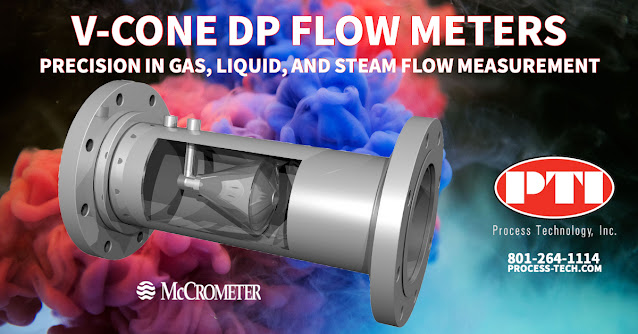
V-Cone DP flow meters utilize the principles of differential pressure measurement to determine the flow rate of fluids. The V-Cone, a cone-shaped object placed in the flow path, creates a controlled disturbance, leading to a pressure differential. The flow rate is accurately calculated by measuring this differential pressure and applying specific equations. The V-Cone DP flow meters are highly versatile, capable of handling various flow conditions for gasses, liquids, and steam.
Accuracy and Reliability
V-Cone DP flow meters have a reputation for exceptional accuracy and reliability, with typical accuracy rates ranging from ±0.5% to ±1.0%. This precision is attributed to the flow conditioning effect of the V-Cone, which reduces the need for a long upstream straight pipe run, minimizing the impact of flow disturbances. The result is consistent and reliable measurements across a broad range of applications.
Versatility
V-Cone DP flow meters offer unparalleled versatility, accommodating various fluids, including gasses, liquids, and steam. This adaptability enables industries to use a single type of flow meter for numerous processes, reducing the need for multiple flow measurement devices and simplifying maintenance and calibration procedures.
Low-Pressure Loss
The design of V-Cone DP flow meters ensures a low permanent pressure loss, providing energy savings and reducing the overall cost of operation. The cone's shape and position create a stable, self-conditioning flow profile, reducing the pressure loss associated with other flow sensors.
Wide Turndown Ratio
V-Cone DP flow meters boast a wide turndown ratio, often reaching 10:1 or higher, allowing for accurate measurement over a broad range of flow rates. This broad operating range enables industries to optimize their processes, reducing waste and ensuring efficient resource utilization.
Low Maintenance and Longevity
The robust design and construction of V-Cone DP flow meters contribute to their low maintenance requirements and extended service life. With no moving parts, V-Cone flow meters are less prone to wear and tear, reducing the need for frequent maintenance and replacement. The V-Cone's resistance to erosion and debris buildup makes it suitable for harsh environments and applications involving corrosive or abrasive fluids.
V-Cone DP flow meters offer numerous advantages over other flow sensors, making them a preferred choice for measuring the flow of gasses, liquids, and steam in various industries. With exceptional accuracy, reliability, versatility, low-pressure loss, wide turndown ratio, and low maintenance requirements, V-Cone DP flow meters have become indispensable for optimizing industrial processes and ensuring efficient resource utilization.
McCrometer, a leading flow instrumentation company, has succeeded remarkably with its V-Cone flow meter. Leveraging over six decades of industry expertise, McCrometer has designed the V-Cone flow meter to deliver unparalleled accuracy, reliability, and versatility in measuring gasses, liquids, and steam. The company's innovative approach to flow measurement has made the V-Cone a popular choice in various industries, including oil and gas, chemical, power, and water management. Through continuous research and development, McCrometer remains committed to providing advanced flow measurement solutions that meet the ever-evolving needs of its customers.
Turbidity measurement is essential to measure and control industrial manufacturing processes for several reasons:
Measuring and controlling turbidity in industrial manufacturing processes is essential for maintaining product quality, optimizing process efficiency, complying with regulations, minimizing environmental impact, and reducing equipment maintenance costs.
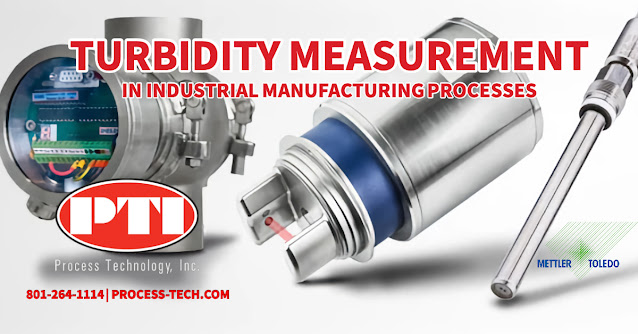
METTLER TOLEDO, a leading provider of precision instruments and services, offers a range of in-line turbidity sensors designed to deliver accurate measurements across a spectrum of turbidity levels, from low to high concentrations and in various industrial applications, such as monitoring fermentation processes in biotechnology and pharmaceutical manufacturing, observing crystallization in chemical and petrochemical industries, tracking phase separation in oil and gas production, evaluating post-filtration clarity in beer brewing, and assessing the quality of wastewater treatment in environmental management.
METTLER TOLEDO's in-line turbidity sensors offer an effective and reliable solution for monitoring and controlling turbidity levels in various industrial processes. By providing accurate, real-time measurements, these sensors help manufacturers maintain product quality, optimize process efficiency, comply with regulations, and minimize environmental impact.