Showing posts with label industrial control. Show all posts

From Raw Materials to Finished Goods: The Pivotal Role of Process Weighing

From Raw Materials to Finished Goods: The Pivotal Role of Process Weighing

Process weighing plays a pivotal role in industrial applications and manufacturing. It forms the backbone of many production processes, ensuring products adhere to specific quality and safety standards. In industries where precision is crucial, minor discrepancies in weight can significantly impact product quality, safety, and efficiency.

There are two main types of process weighing: continuous weighing and static weighing.

Continuous weighing tracks materials as they flow or move continuously through a system. This approach is common in bulk material handling applications, such as food and beverage or chemical industries, where raw materials flow non-stop through a production line. Continuous weighing ensures that materials remain consistent in quantity and quality throughout production.

On the other hand, static weighing pertains to weighing stationary items used when goods need to be checked or verified against a set weight or standard. For example, in packaging applications, static weighing can ensure that packages contain the correct amount of product before shipping to consumers.

Batching technology complements these weighing methods by ensuring that raw materials or products are grouped in specific, predetermined quantities. Batching provides the correct proportion of each component in industries where products are mixed from various ingredients, leading to consistent product quality. It's an integral process, particularly in the food and pharmaceutical industries, where accuracy and consistency can be a matter of health and safety.

Siemens industrial weighing systems stands out as an excellent choice for these technologies. They offer a combination of precision, durability, and advanced technology, making them ideal for a wide range of industrial applications. Siemens has a history of innovation and reliability, which means their weighing systems come with the assurance of high-quality engineering and robust performance. Their systems integrate seamlessly into existing production environments, and they offer versatile solutions tailored to meet each application's unique demands. Moreover, with the support of Siemens' global service network, businesses can rely on expert assistance and timely maintenance.

Process weighing in industrial applications is a critical process variable. It guarantees the quality, safety, and efficiency of products. And with the technological prowess of Siemens industrial weighing systems, industries can achieve the precision and reliability they need to excel in today's competitive market.

Process Technology, Inc.
https://process-tech.com
801-264-1114

Reliable Weighing Systems in the Harshest Industrial Environments

SIEMENS Process Weighing

From the rigors of heavy industry to the precision required in food and pharmaceutical manufacturing, Siemens has weighed it all. 

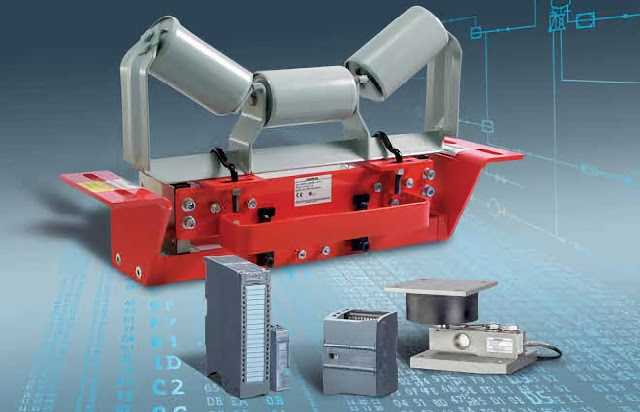
SIEMENS isn’t new to the weighing game. SIEMENS delivers over 50 years of experience in the weighing technology for continuous or static weighing and batching applications to optimize your process costs and quality. With SIEMENS field-proven SIWAREX weighing electronics, SIWAREX load cells, conveyor belt scales, solids flow meters and weighfeeders, SIEMENS weighs your world - with first-class solutions that help you accomplish almost any weighing task.

  • Process weighing and gravimetric level measurement
  • Dosing/Filling/Bagging scale
  • Continuous Weighing
  • Force/Torque measurement

DOWNLOAD THE SIEMENS DYNAMIC AND STATIC WEIGHING INSTRUMENTATION CATALOG HERE

For more information about SIEMENS process weighing products, contact Process Technology. Call them at 801-264-1114 or visit them at https://process-tech.com.

US Power Grids, Oil and Gas Industries, and Risk of Hacking


A report released in June, from the security firm Dragos, describes a worrisome development by a hacker group named, “Xenotime” and at least two dangerous oil and gas intrusions and ongoing reconnaissance on United States power grids.

Multiple ICS (Industrial Control Sectors) sectors now face the XENOTIME threat; this means individual verticals – such as oil and gas, manufacturing, or electric – cannot ignore threats to other ICS entities because they are not specifically targeted.

The Dragos researchers have termed this threat proliferation as the world’s most dangerous cyberthreat since an event in 2017 where Xenotime had caused a serious operational outage at a crucial site in the Middle East. 

The fact that concerns cybersecurity experts the most is that this hacking attack was a malware that chose to target the facility safety processes (SIS – safety instrumentation system).

For example, when temperatures in a reactor increase to an unsafe level, an SIS will automatically start a cooling process or immediately close a valve to prevent a safety accident. The SIS safety stems are both hardware and software that combine to protect facilities from life threatening accidents.

At this point, no one is sure who is behind Xenotime. Russia has been connected to one of the critical infrastructure attacks in the Ukraine.  That attack was viewed to be the first hacker related power grid outage.

This is a “Cause for Concern” post that was published by Dragos on June 14, 2019

“While none of the electric utility targeting events has resulted in a known, successful intrusion into victim organizations to date, the persistent attempts, and expansion in scope is cause for definite concern. XENOTIME has successfully compromised several oil and gas environments which demonstrates its ability to do so in other verticals. Specifically, XENOTIME remains one of only four threats (along with ELECTRUM, Sandworm, and the entities responsible for Stuxnet) to execute a deliberate disruptive or destructive attack.

XENOTIME is the only known entity to specifically target safety instrumented systems (SIS) for disruptive or destructive purposes. Electric utility environments are significantly different from oil and gas operations in several aspects, but electric operations still have safety and protection equipment that could be targeted with similar tradecraft. XENOTIME expressing consistent, direct interest in electric utility operations is a cause for deep concern given this adversary’s willingness to compromise process safety – and thus integrity – to fulfill its mission.

XENOTIME’s expansion to another industry vertical is emblematic of an increasingly hostile industrial threat landscape. Most observed XENOTIME activity focuses on initial information gathering and access operations necessary for follow-on ICS intrusion operations. As seen in long-running state-sponsored intrusions into US, UK, and other electric infrastructure, entities are increasingly interested in the fundamentals of ICS operations and displaying all the hallmarks associated with information and access acquisition necessary to conduct future attacks. While Dragos sees no evidence at this time indicating that XENOTIME (or any other activity group, such as ELECTRUM or ALLANITE) is capable of executing a prolonged disruptive or destructive event on electric utility operations, observed activity strongly signals adversary interest in meeting the prerequisites for doing so.”