What is Diagnostics and Integrity in Process Control?

Diagnostics and Integrity Solution


Diagnostic and Integrity in process systems is a control philosophy that assesses and monitors machine components, cycle time, and instrumentation and refers to the accuracy and reliability of the diagnostic information generated and used in monitoring and controlling a process. The philosophy includes the validity of the sensors, algorithms, and systems that gather and analyze data to identify potential issues and the ability to correctly diagnose and respond to faults in the process to ensure optimal performance and prevent damage or downtime. Diagnostics integrity refers to the trustworthiness of the diagnostic information and systems used in monitoring and controlling industrial processes and the accuracy and reliability of the measurement and diagnostic data generated by the process control instruments. It is an essential aspect of process control as it ensures the safe and efficient operation of the process by detecting and diagnosing issues in real time.


Diagnostics and Integrity ensure that every component in the system is always working correctly.


Diagnostic and Integrity involves several areas of focus:


  • Valid Sensors and Measurements: Sensors used in the process must be accurate and reliable, providing correct and consistent measurements of process variables. Regular calibration of sensors ensures their continued accuracy.
  • Algorithm Accuracy: Algorithms used to analyze process data and detect potential issues must be accurate and reliable, including algorithms for detecting process anomalies, diagnosing faults, and predicting equipment failures.
  • System Robustness: The process control system must be robust and able to handle unexpected conditions and failures, such as sensor or communication failures, without introducing additional errors or causing the process to become unstable.
  • Response to Faults: The process control system must be capable of correctly diagnosing faults and responding appropriately and safely, which may involve shutting down parts of the process, adjusting process variables, or triggering alarms to alert operators.
  • Data Management: The process control system must collect, store, and manage large amounts of diagnostic data, allowing operators to review and analyze the data to identify trends and potential issues.


The value of implementing Diagnostics and Integrity:


  • OEM/End User value add differentiator.
  • A system that is self-diagnostic (Downtime)
  • Compensate for the gap in technical knowledge in the field.
  • Ensure the components in the system are working correctly (Reliability)
  • Alleviate extended downtime through the implementation of monitoring instrumentation.
  • Alignment with quality requirements (Machine data)
  • Ensure a reliable and repeatable process (Quality)
  • Proactive fault indications prompting immediate action from maintenance and engineering (Downtime)
  • Predictive maintenance and planning.
  • Ensure machine and personnel safety.
  • Onboarding new engineers (Monitoring PLC/HMI).
  • Capture data when the device is performing at its best.
  • Extracting and implementing tribal knowledge in the control platform.
  • Increase OEE (Overall Equipment Effectiveness).
  • Maximize the potential of the machine (Productivity and throughput).
  • Increase profit margins through the understanding of machine capabilities.


PTI's RolePresented with diagnostic issues over many years, PTI gained experience and developed an innovative approach to monitoring machine components and processes during normal operations, leading to the development of a program that provides custom solutions specific to your control processes.

  • Through EvaluationPTI assists in identifying the existing machine component monitoring system and relevant data needed to ensure a robust process.
  • Through TrainingPTI provides targeted instruction on the implementation of Diagnostics and Integrity.
  • Through ImplementationPTI provides a custom self-diagnostic synopsis of your system or overall plant based on your operations, staff, and equipment, guiding your engineering staff through the steps to implement Diagnostics and Integrity in your platforms, ensuring process integrity.

Contact Process Technology for more information. Call them at 801-264-1114 or visit them at https://process-tech.com.


Sanitary Valves for Food and Beverage Production

Sanitary Valves for Food and Beverage Production

Sanitary refers to the cleanliness and hygienic conditions in food and beverage production. In the food industry, sanitary conditions are critical to prevent contamination and the spread of disease. This includes keeping equipment, facilities, and products clean and free from contaminants such as bacteria, viruses, and foreign particles.

In the food production process, sanitary valves are used to control the flow of materials and ensure that the production process is hygienic. These valves are designed to meet strict sanitation standards and are typically made from corrosion-resistant materials such as stainless steel or plastic. Some examples of sanitary valves used in food production include butterfly valves, ball valves, and diaphragm valves. These valves are typically easy to clean and maintain and can be disassembled quickly to facilitate thorough cleaning.

Sanitary valves are designed to meet strict hygiene standards and prevent contamination in food and beverage production. They typically have the following design features:
  • Smooth surfaces: Sanitary valves have smooth, non-porous surfaces to prevent the accumulation of bacteria and other contaminants.
  • Easy to clean: Sanitary valves are typically easy to disassemble and clean, with minimal crevices and corners where contaminants can accumulate.
  • Corrosion-resistant materials: Sanitary valves are made from corrosion-resistant materials such as stainless steel or plastic to prevent the growth of bacteria and other contaminants.
  • Gasket-free design: Sanitary valves may have a gasket-free design to eliminate potential sources of contamination.
  • Automatic or manual cleaning: Some sanitary valves are designed to be automatically cleaned during the production process, while others can be manually cleaned as needed.
  • Hygienic connections: Sanitary valves often have hygienic connections such as tri-clamp fittings to facilitate easy and secure connections to other equipment and prevent contamination.
Steriflow Valve is the manufacturer of a wide range of Sanitary Valves including: pressure regulators, back pressure regulators, gas pressure regulators, control valves, steam traps, check valves, sample coolers, sight glasses and sample valves.

Process Technology, Inc.
801-264-1114


Siemens Level Instrumentation

Siemens Level Instrumentation

Industrial automation implements control systems, sensors, and computers, making processes safer and more productive while also improving the quality and speed of production. All kinds of manufacturing utilize industrial automation, from small-batch production to mass production. 

You will find industrial level control and measurement systems in many industries, including food and beverage, oil and gas, power generation, semiconductor manufacturing, pharmaceuticals, and petrochemical industries. Industrial level measurement is commonplace at an industrial site, manufacturing plant, processing facility, or large buildings where the material level in tanks, silos, bins, pipes, or other vessels needs monitoring. The application of different level transmitters and switches depends on the industry or manufacturing process. Level measurement keeps a product's quality high by determining the weight or volume of ingredients and making changes to the production process based on the instruments feedback, providing continuous improvement. 

Measurement at the industrial level is essential for ensuring that people working in plants, factories, and other industrial settings are safe. Industrial level measurement systems watch and control industrial processes to ensure they run smoothly and safely. Companies that make chemicals, pharmaceuticals, and hydrocarbons (products that need special care and attention because of their hazardous nature) use level transmitters and switches as part of their safety system, protecting the health and safety of workers and communities. Additionally, industrial level measurement is vital for protecting the environment from dangerous materials leaking or spilling. A person usually can't tell if a hazardous material leaks at an industrial plant just by looking. Accurate level measuring assists in determining if dangerous materials escape into the surrounding area, ensuring they don't contaminate the environment or water sources and make them unsafe.

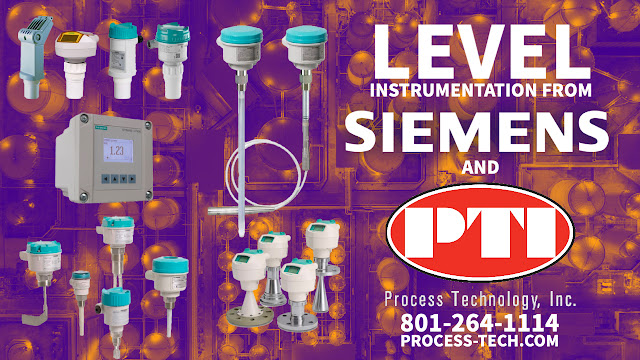
Siemens, a world leader in process control instrumentation and automation, manufactures a full line of level switches and transmitters that are arguably the most advanced on the market. Siemens level instruments improve product quality and plant safety and assist in protecting the environment and our natural resources.

Process Technology, Inc.
801-264-1114

Vibration Analysis and Wireless Vibration Solutions from Banner


Introduction: What is Vibration Analysis?


Vibration analysis studies vibration's frequency, amplitude, and damping in mechanical structures to detect and diagnose faults in machinery and industrial equipment. Vibration analysis aims to identify the source of a potential or existing problem and provide a solution to fix it.


What are the Different Types of Industrial Vibrations?


Industrial vibrations are a common occurrence in many industries. They cause damage to equipment, structures, and even people if not controlled. It's critical to understand different industrial vibrations and how to manage them and minimize their effect on people and equipment.


The different types of industrial vibrations are:

  • Shock Vibration - This is when an object is suddenly moved or released, causing it to move rapidly back and forth.
  • Random Vibration - An object moves randomly with no pattern or specific frequency.
  • Steady State Vibration - Steady-state vibration occurs when an object moves at a constant rate with no change in amplitude or frequency.
  • Random Excitation - This vibration occurs when something vibrates because it has been disturbed by some external force such as noise or wind.
  • Resonance

The Banner QM30VT Series sensor has a low-profile design and rigid metal construction that reduces resonant interference and increases surface contact, enabling exceptional levels of accuracy in measuring RMS velocity and temperature. They can detect even slight increases in machine vibration and temperature for early identification of potential problems.

The QM30VT continuously monitors machine health and run time and detects unexpected failures such as early bearing failure, unbalance, misalignment, etc. The QM30VT2 works in various machines to identify and predict failures in rotating components. Paired with a Sure Cross wireless radio, the QM30VT2 becomes the ultimate predictive maintenance tool for wireless vibration and temperature monitoring.

For more information about Banner products in Utah, Western Wyoming, Idaho, Northern Nevada, Colorado, Eastern Wyoming, and Montana contact Process Technology, Inc. Call 801-264-1114 or visit https://process-tech.com.

Industrial IoT Control Panel Design

Industrial IoT Control Panel Design

Introduction: What is IIoT and Why is it Important?


IIoT (Industrial Internet of Things) is the network of physical devices, sensors, vehicles, buildings, and other items in an  industrial realm—embedded with electronics, software, sensors, actuators, and connectivity that enables these objects to collect and exchange data. Process control IIoT applications used for measuring and monitoring flow, pressure, temperature, vibration and level are found in manufacturing, supply chain management, and smart factories.

Wireless Networking for Connected Devices


A wireless network is a system that allows devices to communicate with each other without the use of a wired connection. Wireless networks are becoming increasingly popular as they are easy to set up, cost-effective, and provide high performance and security for data transmission. They also offer mobility and versatility for users who need to access their data from multiple locations.

Control Panel Design for IIoT Systems


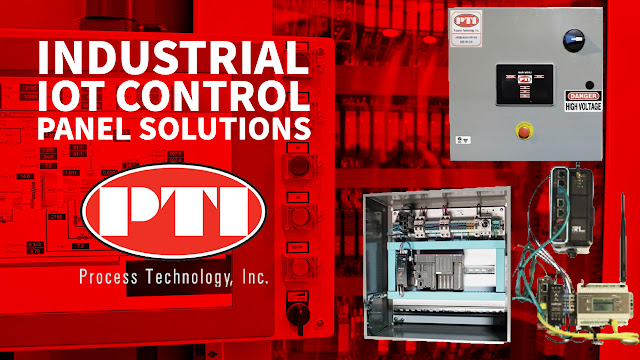
The control panel is the physical interface between the operator and the industrial automation system. It provides local control and monitoring of the process.  Wireless industrial control panels are replacing wired panels in many industries because of the benefits to users and companies:

Industrial IoT Control Panel Solutions:
  • Solve issues with costs and difficulties in traditional hard-wiring.
  • Quickly and locally identify process conditions and alert, alarm, or correct outputs to normalize the process.
  • Efficiently deploy various instruments and controls to interact with the process.
  • Provide easy-to-understand displays showing in-depth information.
  • Provide real-time information to corporate information systems.
  • Are easy to install anywhere, even in remote locations with no power supply.
  • Are more flexible with their use and have applications in many industry types.


Discuss Your IoT Control Application with Process Technology, Inc.

    Process Technology, Inc. Industrial IoT control panel solutions improve operational efficiency and lower costs. They safely and accurately monitor your analytical, flow, level, pressure, level, or vibration for compressors, generators, conveyors, tanks, and pipelines on a wireless or wired panel and offer options customized for your application.

    PTI sales engineers will discuss your requirements on-site and evaluate your precise needs. Factory engineers and service technicians provide design, manufacturing, and implementation for a complete, cost-efficient solution package to automate your process and factory automation needs.

    Contact Process Technology for more information. Call them at 801-264-1114 or visit them at https://process-tech.com.

    SITRANS P Pressure Instrumentation by Siemens


    Siemens SITRANS P is a comprehensive line of measurement instruments for assessing absolute, differential, and relative pressure. Along with excellent operational ease and practicality, high measurement precision, and robustness, the modular system performs as a perfect safety concept.

    Process Technology, Inc.
    801-264-1114